Home › Sitework and Structural Concrete
Get dependable sitework and structural concrete in Sugar Land, TX for your commercial projects. We install footings, walls, piers, and equipment pads to engineering specs. Our team coordinates with excavators and steel trades to keep your schedule moving.
Superior Concrete Sugar Land provides professional structural concrete throughout Sugar Land, TX, Texas and the surrounding area. Our licensed, insured crew delivers safe, clean, on-time work with a free estimate before anything begins. Call (346) 642-5160 or request your free quote.
Sitework and Structural Concrete for Sugar Land Properties
In Sugar Land, structural concrete is what keeps your building straight, level, and safe on our shifting Gulf Coast soils. Superior Concrete Sugar Land focuses on both the sitework that happens before concrete is ever poured and the structural concrete that carries the weight of your home, shop, or commercial building.
Most of the jobs we handle here involve clay-heavy soil that swells when wet and shrinks in the heat. That movement is what causes cracks in driveways, slab foundations, and warehouse floors. Good sitework and properly designed structural concrete limit that movement and spread loads so you are not chasing repairs a few years later. Whether you are putting up a metal building near Highway 6, an addition on a Sugar Mill home, or expanding parking at a medical office off 59, the process starts with understanding your soil and loads, not just mixing concrete and hoping for the best.
Our team is used to working around existing utilities, tight subdivision lots, and live businesses that have to stay open during construction. We plan phasing, access, and drainage up front so the structural concrete installs cleanly and you are not left with puddles, trip hazards, or code problems when the work is finished.
How We Handle Sitework Before Any Concrete Goes In
Good structural concrete is only as solid as the ground under it. Sitework is the step-by-step prep that makes sure of that. Superior Concrete Sugar Land typically starts with a site walk, checking elevations, existing drainage patterns, and any visible signs of soil movement or previous failures. On some projects, especially larger commercial slabs or multi-bay garages, we recommend or work from a geotechnical report so we are not guessing about soil conditions.
Clearing and stripping come next. We remove grass, roots, organic topsoil, old concrete, and debris to reach firm subgrade. Leaving soft spots is one of the main causes of settlement. In Sugar Land subdivisions, we frequently run into old fill or buried construction trash from the first wave of development. We dig that out instead of trying to compact over it.
Once we are down to stable soil, we fine grade and compact. Depending on the design, we bring in select fill, crushed concrete, or stabilized sand and compact it in lifts with plate tampers or rollers. For driveways and parking lots that see heavier trucks, we spend extra time proof-rolling and reworking any areas that pump or deflect. In low-lying areas near Oyster Creek or older neighborhoods that hold water, we often integrate subgrade stabilization with lime or cement treatment to reduce future heaving.
We also address drainage during sitework. That includes setting slopes so water moves away from foundations, adding swales where needed, and placing any under-slab plumbing sleeves or conduits before forms go in. Getting this right during sitework is far cheaper than cutting into finished structural concrete to fix a missed drain or line.
Our Structural Concrete Process From Forms to Finish
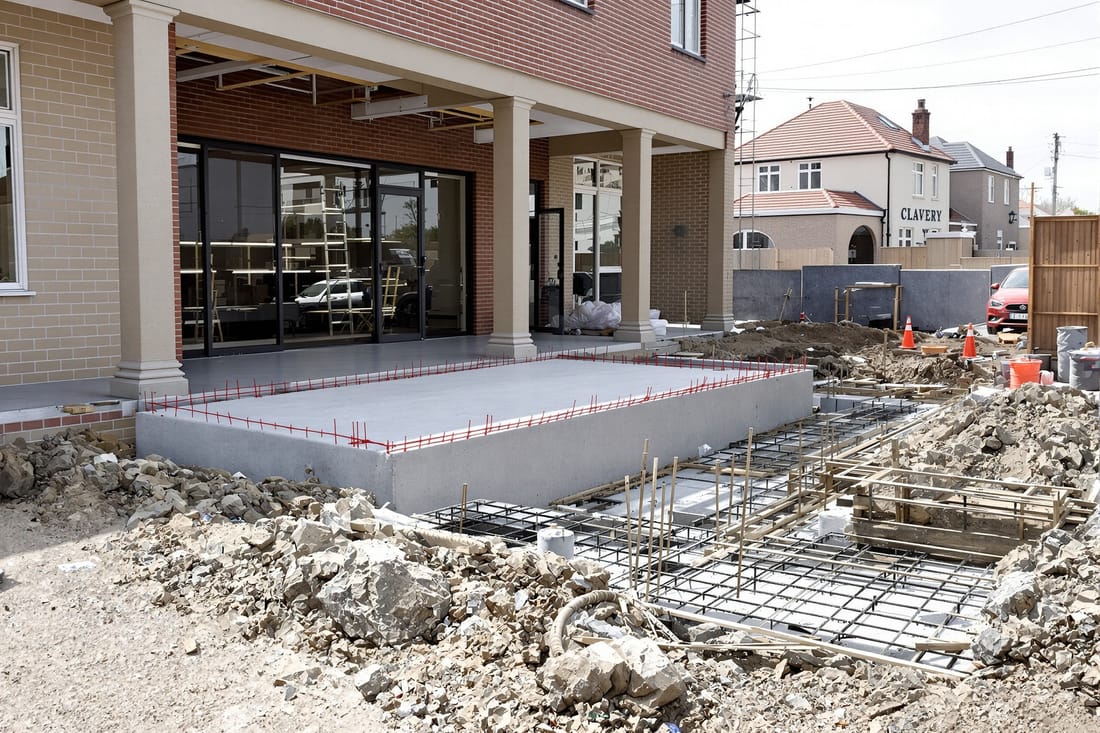
Superior Concrete Sugar Land handles structural concrete with a clear sequence so there are no surprises. After sitework, we set forms with string lines and laser levels to lock in elevations and slab thickness. Forms are staked and braced to stay put during the pour. For thickened edges, footings, or grade beams, we dig and shape those areas to match the engineer’s drawings.
Reinforcement is next. For most residential and light commercial structural slabs in Sugar Land, we install a combination of rebar and welded wire mesh, or post-tension cables if the engineering calls for it. We chair the steel or suspend the mesh so it sits in the correct position inside the slab instead of sinking to the bottom, which is a common flaw in rushed jobs. For beams and foundations, we tie continuous rebar cages with proper laps and hooks to create a single load path.
Concrete mix design is chosen based on structure type and use. Typical structural concrete for slabs and foundations is in the 3000 to 4000 psi range, with higher strengths for columns, heavily loaded beams, or commercial applications. In our summer heat, we often schedule early morning pours, adjust slump with plasticizers instead of water, and may use retarding admixtures so the surface does not set too quickly. This reduces surface cracking and improves long-term strength.
During placement, we use vibrators around congested reinforcement and in deeper beams to remove air pockets and ensure full contact. We laser screed or hand screed smaller pours, then bull float and edge. Control joints are cut or tooled at spacing and depth that match the slab thickness and expected movement pattern. For exterior structural slabs like loading areas or RV pads, we typically use a broom finish or light texture for slip resistance, and we recommend curing compounds or wet curing methods to keep the surface from drying out too fast in the Texas sun.
Cost Drivers and Common Issues With Structural Concrete
The cost of sitework and structural concrete in Sugar Land depends on several specific factors, not just square footage. Soil conditions are one of the biggest drivers. Soft or highly expansive soils require more excavation, better base materials, or deeper beams, which adds labor and material. Access is another factor. Tight backyards in older neighborhoods like Sugar Creek may require smaller equipment and more handwork compared to open lots or commercial sites, and that time affects the price.
Thickness of slabs and size of footings or grade beams also change the cost. A light residential slab for a backyard workshop is very different from a structural slab designed for forklifts in a warehouse. Reinforcement type matters as well. Post-tensioned systems, heavy rebar mats, or closely spaced bars increase both material and tying labor but may be needed to limit cracking and movement on certain soils.
Common problems we are called in to address include random cracking, ponding water on slabs, and edges breaking off driveways or approaches. Many of these trace back to poor subgrade prep, thin or inconsistent slab thickness, lack of reinforcement at transitions (like where a driveway meets the street), or no accommodation for drainage. Superior Concrete Sugar Land works to prevent these up front. We maintain minimum slab thickness, add extra steel or thickening at entry points, and set elevations so water sheds properly.
We also talk openly about realistic expectations. All concrete cracks to some degree, especially here where we have large temperature swings and reactive soils. The goal is to control where and how it cracks through proper joints, reinforcement, and curing, and to design the structure to stay functional and safe over time even with normal movement.
What Sugar Land Customers Should Decide Before Hiring
Before you hire a contractor for sitework or structural concrete, it helps to have a clear picture of what you need the concrete to do over the long term. For a new foundation, that means sharing your building plans and any engineering you already have. For a shop slab, RV pad, or commercial floor, think about the heaviest loads, tire types, and how often vehicles will turn or pivot on the surface. That information affects thickness, reinforcement pattern, and joint layout.
Ask any contractor how they evaluate the soil, what base material they use, and how they compact it. In Sugar Land, you should hear specific answers that mention clay content, moisture conditioning, and lift thickness, not just "we compact it." Also ask who is responsible for layout and elevation control, whether they follow engineered drawings when provided, and how they plan to handle drainage around the new concrete.
You should also clarify curing and protection. We explain how long the structural concrete needs before heavy use, what early loads are acceptable, and when to schedule follow-on trades or equipment. For example, parking cars on a new residential driveway is usually fine after about a week, but heavy dumpsters, storage pods, or lifts typically need to wait longer based on the mix and weather.
Superior Concrete Sugar Land provides written scopes, references from local projects, and clear communication on schedule and access so you know what to expect from excavation to final finish. For property owners in Sugar Land, Missouri City, and nearby areas, that level of detail up front usually pays for itself in fewer callbacks, less settlement, and structural concrete that does what it was designed to do for years.