Home › Commercial Concrete Contractor Services
Keep your project on schedule with a reliable commercial concrete contractor in Sugar Land, TX. We handle slabs, parking areas, foundations, and structural concrete for retail, industrial, and multi family sites. Our team coordinates with your superintendent and trades to deliver quality work and timely pours.
Superior Concrete Sugar Land provides professional concrete contractor throughout Sugar Land, TX, Texas and the surrounding area. Our licensed, insured crew delivers safe, clean, on-time work with a free estimate before anything begins. Call (346) 642-5160 or request your free quote.
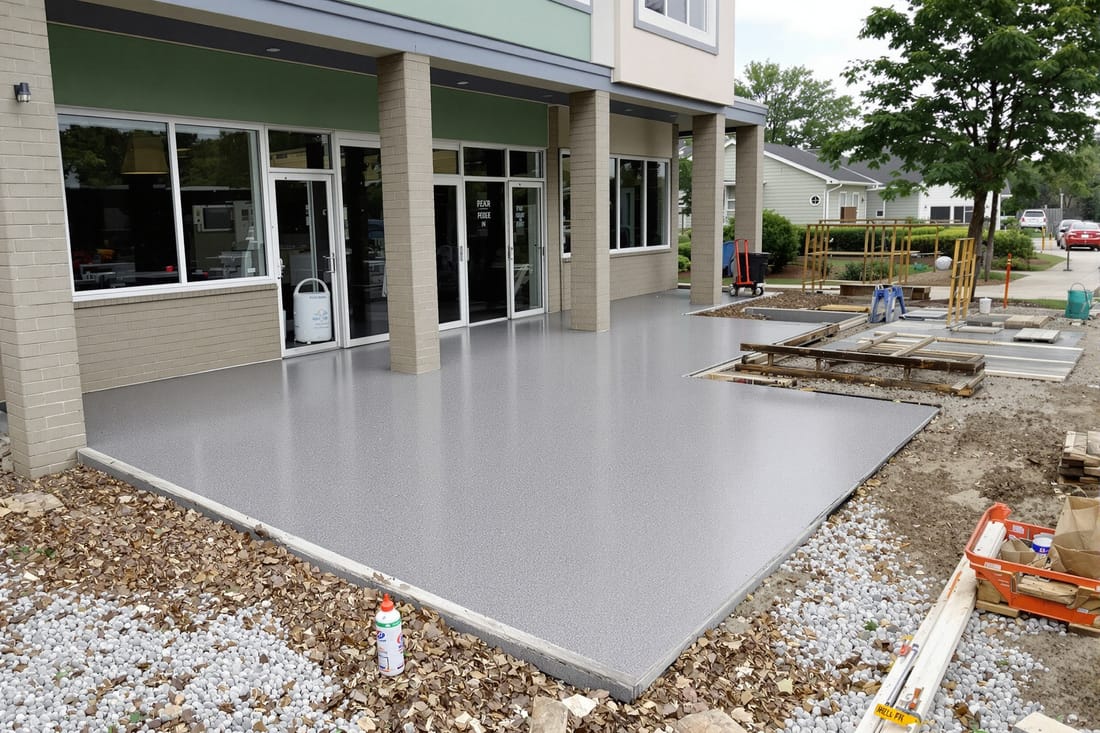
Commercial Concrete Built for Sugar Land Businesses
Commercial concrete work in Sugar Land is different from residential jobs. You are dealing with heavier traffic, delivery trucks, strict city code, and the Texas heat. Superior Concrete Sugar Land focuses on commercial concrete contractor services that hold up to those real-world demands, not just what looks good on opening day.
We work with property managers, general contractors, and business owners across Sugar Land and the southwest Houston area on parking lots, drive lanes, loading docks, dumpster pads, walkways, curbs, and structural slabs. Before we price anything, we look at how your site is actually used. A medical office with light car traffic needs a different slab section than an industrial warehouse that sees 18-wheelers every day.
Our first step is a site visit. We check existing pavement failures, soil conditions, drainage patterns, and traffic flow. You will see us walking the site with a level and probing soft areas of subgrade. We also look for things that slow commercial projects down, such as limited work hours, shared driveways with neighboring tenants, and nearby entrances that must stay open for emergency access. From there we give you a written plan that covers scope, concrete thickness, reinforcement, phasing, and realistic timelines instead of a one-line lump sum number.
Because this is commercial work, we coordinate with city inspectors in Sugar Land and Fort Bend County when permits, inspections, or traffic control plans are required. If you already have an engineer of record, we build exactly to that spec and document each step with photos and batch tickets so you have a clear record for your files.
How Our Commercial Concrete Process Works
Once the plan is set, we schedule work around your business hours. For offices and retail centers in Sugar Land, that usually means early morning pours or weekend phases so tenants can stay open. For warehouses and industrial yards, we often phase the site so part of the yard stays active for trucks while we work on another section.
Demolition and removal come first. We saw-cut the existing concrete or asphalt into manageable sections to protect nearby structures and utilities, then break and haul off debris to an approved facility. During tear-out our crew watches for shallow utilities, irrigation lines, and unknown conduit crossings, which are common in older Sugar Land centers.
Next is subgrade preparation. Commercial concrete fails more from bad base than from bad mix. We regrade for proper slope toward inlets or swales so water does not pond near doorways or loading docks. Then we compact the soil and install base material if needed, usually crushed concrete or limestone meeting local standards. We use plate compactors and rollers and we do proof rolls or simple load tests so soft spots are corrected before any concrete is placed.
Formwork and reinforcement follow. We set forms to the correct thickness and slope, then place rebar or welded wire mesh according to the load requirements. Dumpster pads, drive lanes that see tractor trailers, and dock approaches almost always get #4 or #5 rebar on a tighter spacing, sometimes with dowels drilled into existing slabs to tie everything together. For large slabs or parking areas we lay out control joints and construction joints ahead of time so cracks form where they can be controlled instead of across door thresholds.
On pour day we time ready mix deliveries so the crew is not rushed but the concrete is still within placement limits. We use mechanical screeds when feasible for consistent slab thickness, then float, edge, and broom or trowel depending on the specified finish. In hot Sugar Land weather we use set retarders, shaded water, and additional manpower so the surface can be finished and jointed before it flashes off in the sun.
Material Choices, Finishes, and Structural Options
For most commercial slabs and pavement in Sugar Land, we recommend a compressive strength between 3,500 and 5,000 psi, depending on traffic and load. Heavy truck lanes, fire lanes, and loading areas usually fall at the higher end, sometimes with thicker sections and closer reinforcement spacing. Light-duty parking stalls and walkways can often use slightly lighter sections to manage costs without sacrificing performance.
We work with local ready mix suppliers who know our climate and city requirements. Air entrainment, water-to-cement ratio, and appropriate admixtures are selected to balance strength, workability, and longevity. In summer we often request mixes with retarder and schedule earlier pours to reduce rapid moisture loss and surface checking. In cooler months we monitor temperatures and set times to avoid slow cure that can delay joint cutting and opening to traffic.
Finishes are driven by use and safety. Exterior parking and sidewalks usually receive a medium broom finish for slip resistance, especially important when storms roll in from the Gulf. Interior commercial slabs that will receive racking or machinery can be machine troweled to a flatter finish, or even densified and polished later by others if that is the long-term plan. Around loading docks and ramps we pay extra attention to traction and water runoff so forklifts and pallet jacks can operate safely.
Structural options can include thickened edge beams at roll-up doors, haunches at dock pits, and isolated pads for heavy equipment. For retail centers, we often pour monolithic curbs with pavement to reduce joints and speed construction. If you have landscape islands, we can install curbs with doweled connections to help prevent movement and cracking along the joints.
Joint layout is a key part of long-term performance. We plan saw-cut or tooled control joints based on slab thickness and panel size, then return at the correct time after finishing to cut them. Timing matters in Sugar Land because surface temperatures can stay hot into the evening, so we coordinate with the mix design and weather to cut joints early enough to control random cracking without raveling the surface.
Cost Drivers, Scheduling, and Seasonal Considerations
Commercial concrete costs in Sugar Land are driven by more than just square footage. Thickness, reinforcement type, base requirements, access, and phasing all impact your final number. A 6 inch reinforced drive lane that must be poured in three phases over weekends will cost more per square foot than a wide-open 4 inch parking area poured all at once.
Subgrade corrections and drainage upgrades are another major factor. If your site has chronic ponding or soft spots, we may recommend undercutting poor soil, importing select fill or base, and reworking grades. This adds cost but often saves you from early failures and warranty issues with your tenants. We show these items separately so you can see where your money is going and why.
Working hours and access also matter. Many Sugar Land retail centers along Highway 6 and US-59 require night or early morning work so businesses can keep operating. That may involve lighting, noise limits, and traffic control, which affect labor costs. If work is near busy entries, we may propose temporary driveways, steel plates, or staged openings so customers and delivery trucks can still reach your property.
In our climate, you can pour concrete year-round, but the approach changes. March through May and late September through early November are usually ideal. In the hotter summer months we adjust start times, use proper curing methods like curing compound or wet coverings, and protect new slabs from rapid drying and surface cracking. During stormy periods, we watch the forecasts carefully and avoid large pours if there is a high risk of intense downpours that can wash the surface and ruin the finish.
Superior Concrete Sugar Land provides realistic schedules tied to your specific site and season. We let you know when sections can accept foot traffic, light vehicles, and full truck loading instead of giving a generic answer. That helps you coordinate tenant move-ins, material deliveries, and any other trades that need slab access.
Common Problems We See and How We Prevent Them
Most of the commercial concrete calls we get in Sugar Land come from property managers dealing with recurring failures. The issues tend to fall into a few patterns: thin pavement in heavy load areas, poor drainage toward buildings, lack of reinforcement at dumpster pads, and joints that were either never cut or cut too late.
At dumpster enclosures, we often find broken slabs that were poured at the same thickness as the surrounding parking stalls. Front-load and roll-off trucks concentrate their loads at the wheels closest to the cans, which quickly beats up underbuilt concrete. Our standard fix is a thicker, fully reinforced pad that extends beyond the wheel paths, usually with dowels tied into the existing pavement for load transfer. We also coordinate enclosure placement and grades so washout water does not run across public walkways.
Drainage problems are another frequent complaint. Ponding near storefront entries, ADA ramps, and dock doors can lead to slip hazards and interior leaks. When we replace or add concrete, we check actual elevations and not just the existing slopes by eye. If needed, we reconfigure grades, add extra inlets, or use valley gutters to carry water where it needs to go. It is easier to correct these issues while the pavement is open than after you have new concrete that still holds water.
Random cracking and surface scaling usually trace back to poor joint design, rushed finishing, or inadequate curing. Our crews follow a consistent process: establish a joint plan before forming, finish only as needed without overworking the surface, then begin saw-cutting at the right time for that mix and temperature. After finishing and jointing, we apply curing compound or other approved curing methods to slow moisture loss. That step is especially important in Sugar Land's heat and wind.
Superior Concrete Sugar Land focuses on helping you avoid repeating the same failures. We will tell you when value engineering makes sense and when cutting corners will cost you more in the long run. By addressing load capacity, drainage, reinforcement, and curing up front, we give your commercial concrete a far better chance of lasting without constant patching and trip hazard repairs.